
Some rounds feel almost magical. The swing is loose, the ball flies on the intended line, and putts seem drawn to the hole. Other days, with the same clubs and the same body, golf feels like hard work. That gap is what golf psychology is all about.
From our experience coaching players across all levels, we see that this gap is rarely a swing problem. The motion that produced the best round of a golfer’s life does not vanish overnight. What changes is the state of mind standing over the ball. Tour professionals know this, and the best amateurs learn it fast, benefiting from the striking ways that playing golf reshapes both body and brain through regular practice and mental engagement. Mastering the mental game is every bit as important as dialing in mechanics or getting a high quality club fitting.
When golfers begin to focus on golf psychology in a clear and simple way, performance stops feeling random. Scores become more stable, pressure feels less heavy, and the game starts to be fun again, even in tough conditions. Instead of fighting thoughts and emotions, players learn to see them for what they are and swing with more trust and freedom.
At Elite Golf Academies, we combine tour-tested coaching, technology such as TrackMan 4, and specialist mental training through our MYP Golf partnership. In this guide, we share the same mental principles we use with our students across the UK. By the end, there will be practical tools to use in the next round, plus a clear picture of how structured coaching can turn the mind from a constant critic into a reliable partner on the course.
“Golf is not a game of perfect.”
— Dr. Bob Rotella, sports psychologist
Golf psychology explains why the same golfer can play like a star one day and feel lost the next, even though the physical swing has not changed overnight. When attention shifts from controlling every movement to trusting a simple process, performance becomes more stable and rounds feel calmer. This change starts with understanding thoughts and emotions instead of fighting them.
Most common mental tips ask players to think more, control more, and try harder, which often adds tension instead of removing it. A better approach is to strip away mental clutter, release rigid expectations, and let a clear intention guide each shot. This lighter attitude allows the natural swing to show up far more often, even under pressure.
Working on the mental game does not require years of training before results appear. Simple shifts such as playing one round with no score goal, treating range swings and course swings as the same task, and noticing the role of ego can change performance the very next day. When those ideas are paired with structured coaching at Elite Golf Academies and MYP Golf, progress becomes faster and more reliable.

Every golfer can describe two very different versions of their game. On a good day, the swing feels smooth, the strike is solid, and the ball flights match the intention without much effort—a state that research on rotational biomechanics of the elite golf swing shows is linked to optimal body mechanics and reduced mental interference. There is a quiet sense of confidence, a strong picture of the target, and very little internal chatter. Misses still happen, yet they pass quickly and do not spoil the round. Many players describe this as being in a flow state or “in the zone.”
On a difficult day, the experience can flip completely. Common signs include:
Tension in the grip, shoulders, jaw, and even breathing
A mind racing with technical thoughts, swing tips, or worries about score and who is watching
Shots that feel forced, with chips coming out thin or heavy and putts struck with a jab rather than a smooth roll
Good shots dismissed as lucky, while every mistake seems to confirm that something is badly wrong
When we coach golfers through these swings in performance, the key lesson is simple. Their physical ability does not evaporate between rounds, and their clubs do not change. The variable is mental interference. Doubt, anxiety, and tight control act like clouds in front of a mountain peak. The peak is still there, but it is harder to see. Building awareness of these two states is the first step, because a golfer cannot change what they have not yet noticed.
“Golf is a game that is played on a five-inch course – the distance between your ears.”
— Bobby Jones
Much of the advice golfers hear about the mind sounds sensible on the surface, yet it often makes things worse. Many players think the answer lies in more control, more rules, and more effort. As golf psychology coaches, we see that the best results come when we remove pressure instead of adding it.
Myth 1: You Must Control Your Thoughts
A common idea is that a player must clear their mind or replace every negative thought with a positive one. Try not thinking of a pink elephant and notice what appears instantly. Thoughts arise on their own. They are neutral, harmless events in the mind, with no direct power over the ball. The important move is not to crush them, but to see that a thought about the water on the right is just that, a passing image, not a command that must be obeyed.
A more helpful pattern is:
Notice the thought (“There’s water right”)
Label it as a thought, not a fact
Gently return attention to the target and the shot plan
Myth 2: Bad Rounds Mean You Lost Your Swing
After a rough day, many golfers rush to the range claiming they have lost their swing. Yet almost everyone has played badly one day and well the next with no practice in between. Nothing was truly lost. What changed was trust. When belief in the swing vanishes, the mind starts hunting for fixes, positions, and tips. This frantic search tightens the body and hides the skill that is already there.
Myth 3: Rigid Routines Are Essential
Pre shot routines can help, but only when they grow naturally from clear intention. Forcing a fixed set of steps for every shot can turn into another test to pass or fail. Then the mind worries about whether the routine was perfect instead of focusing on the lie, the wind, and the target. A better approach is a flexible pattern. Some shots need more planning, some far less. When the mind is calm and clear, the body tends to do what is needed without strict rules.
Myth 4: Visualization Causes Good Shots
Players are often told that if they can see a perfect shot in their mind, the body will produce it. Every golfer has pictured the ideal shot and then hit something very different. The reverse is also true. Many great shots happen with very little deliberate imagery. A clear picture often appears when the mind is relaxed, so it is linked to good play, but it does not cause it on its own. Forced images and fake positivity can build more pressure instead of helping.

When we strip golf psychology down to its core, one word keeps coming up, and that word is trust. Trust means standing over the ball with a realistic plan, then allowing the swing to happen without constant correction. It does not mean blind faith that every shot will be perfect. It means belief that, whatever happens, the player can handle it without panic.
You can think of trust in two simple ways:
Trust is: confidence in the work you have done, commitment to a target, and willingness to accept the result
Trust is not: guessing, hoping for miracles, or expecting flawless swings on every shot
The habit of searching for fixes can break this trust. After every poor shot, the mind wants a story about what went wrong and how to avoid it. That story might feel comforting, yet it keeps attention stuck on mechanics and past mistakes. Over time, the body starts to expect interference and tightens in self defence. The harder a golfer tries to control the motion, the more awkward it becomes.
At Elite Golf Academies, we help players move from this strained style of golf to a calmer, more intuitive way of swinging, drawing on peer-reviewed golf science research articles that examine the psychological and biomechanical factors affecting performance. Our PGA European Tour inspired coaching models how top players think on the course. Lessons are personal, yet the message is similar. Do the technical work in the right setting, often with TrackMan 4 and high speed cameras, then practice letting go of those thoughts when it is time to score. This blend builds trust gradually, rather than trying to flick a mental switch overnight.
Mark, a 35 year old executive, is a good example. He arrived close to quitting the game, convinced that his mind and swing were both broken. Over time, with structured coaching, fitness support, and simple mental frameworks, he shifted from angry and tense to calm and confident. Scores dropped into single figures, but more importantly, he learned how to treat each shot as a fresh task rather than a test of his worth. That same discipline then fed back into his working life, showing how powerful this mental foundation can be.
“Golf is 90 percent mental and 10 percent physical.”
— Jack Nicklaus

Golfers hear phrases like “stay in the moment” and “one shot at a time” so often that they start to sound like clichés. In golf psychology terms, they point to something very real. A player can only ever experience thoughts and feelings right now. Memories of the last hole and worries about the closing stretch are still mental events happening in the present.
The problem is not that the mind wanders. It always will. The key skill is noticing when attention has drifted and gently bringing it back. That simple act of noticing brings a player back to the present. From there, curiosity becomes a far more reliable form of focus than raw willpower. Trying to force concentration feels like clenching a fist in the mind. Curiosity feels lighter and more sustainable.
A practical way we teach presence is to ask players to become genuinely interested in the shot in front of them. Before swinging, we suggest they check a few simple details and really notice them, without rushing past them:
The lie of the ball can be studied closely, noticing whether it is sitting up, nestled down, or on a slope. This small check guides club choice and shot type far better than a vague glance. When a golfer becomes absorbed in this detail, the mind has less room for stories about past holes or the card.
The wind can be felt and observed by watching trees, clothing, and the behaviour of the grass near the ball. Instead of worrying about what might go wrong, the player starts to think about how the wind will shape the shot. This way of thinking brings attention back to the task and makes pressure situations feel more like an interesting puzzle to solve.
The ground under the feet can be sensed while taking the stance, noticing firmness, tilt, and grip. This awareness helps balance and rhythm, and it also anchors the player in their body rather than in swirling thoughts. Many of our students report that this simple check reduces nerves on the first tee.
Our academies use interactive simulators to support this skill as well. By recreating real course scenarios indoors, we give players a safe space to practice present moment decision making. They learn to look at the data, make a clear choice, and then commit, which mirrors what they will face outside.
Elite Golf Academies coaches often remind players: “If you are truly interested in the shot in front of you, there is far less space for doubt to take over.”
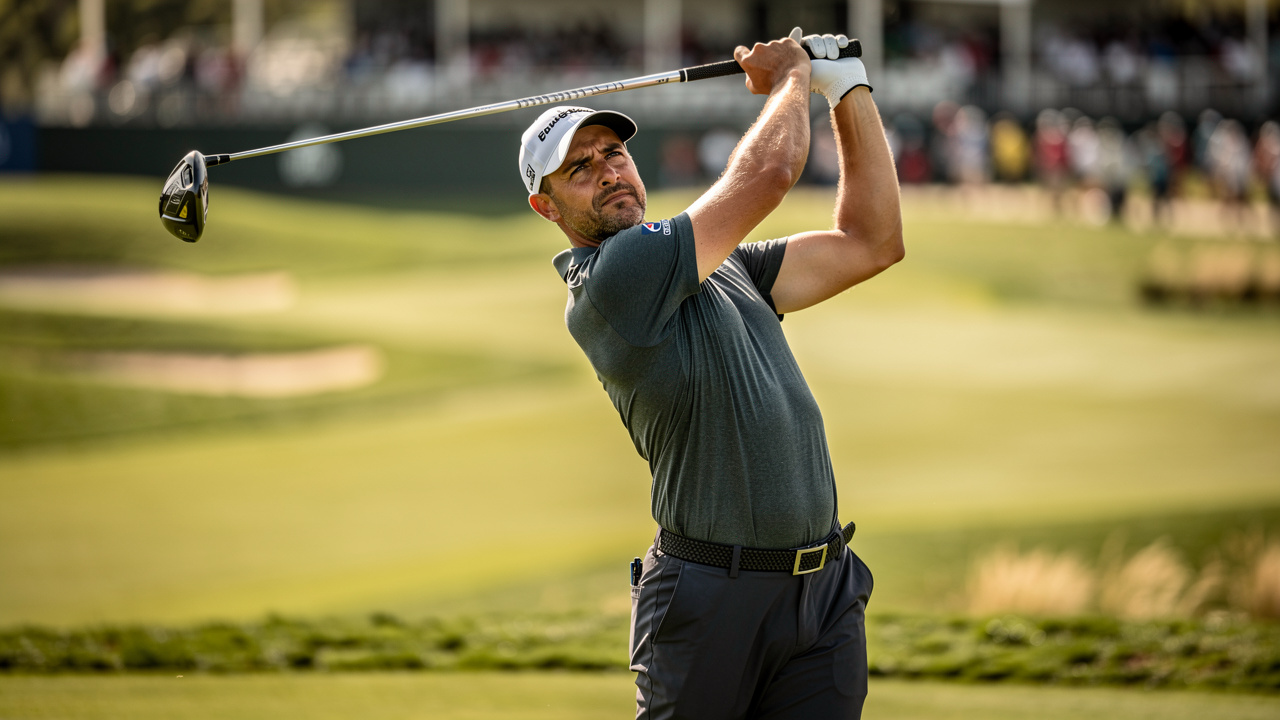
Pressure in golf feels as if it comes from scorecards, opponents, or important events, but golf psychology shows that it starts inside the mind. When a player ties their personal value to a number on the card, every shot becomes a threat. The body reacts with a fight or flight response, raising heart rate, tightening muscles, and making smooth motion very hard.
We see this most clearly when golfers say their range swing disappears on the first tee. The swing has not gone anywhere. On the range, there is no story about what a shot means. On the course, especially in tournaments, the same motion is loaded with ideas about handicap, selection, or what others might think. The golf ball does not know the difference, yet the mind treats them as completely different tasks.
One helpful shift is to view every swing, whether on the practice ground or in a championship, as part of the same game. Each shot is simply a chance to apply a plan, put a swing on the ball, and learn something from the result. When players adopt this view, the sense of threat starts to fade. Nerves may still appear, but they are no longer seen as proof that disaster is coming.
The idea of “the zone” fits here as well. Many golfers try to chase that perfect state by pumping themselves up or repeating mantras. The harder they try, the further it seems to slide away. In our experience, flow appears when resistance drops. When players stop treating certain shots as life changing, their swing often returns to the same free motion they show in practice.
Through our partnership with MYP Golf, we offer structured support for these pressure moments. Their online golf psychology courses, led by experts such as Jamie Donaldson and Bevis Moynan, break down topics like performance anxiety, mindset, and competitive focus into clear modules. When we combine that training with on course coaching, players not only understand why they have been tense, they also gain simple routines and reflections that guide them back toward a calmer state.
Underneath many mental struggles in golf lies the ego, in the psychological sense rather than simple arrogance. The ego is the inner character that wants to be seen as good, strong, and in control. It is the voice that says “I cannot miss this” or “Everyone will think I am terrible if I mess this up.” In golf psychology, we treat this not as a fixed thing, but as a pattern of thoughts that can be observed.
The ego has a strange way of working. It wants success, but it also loves drama. An easy round does not give it much to talk about. A battle, a comeback, or a brave save on the last feels more satisfying to that inner storyteller. This pulls players into seeing rounds as heroic tests instead of interesting puzzles. The more meaning that gets placed on one event, the more pressure and resistance grow.
Flow states feel so light partly because the ego quiets down. During those holes, there is little interest in who gets credit. There is just golf being played. The moment a player thinks “I am on for a personal best here” and starts to cling to that story, the ego has stepped back in, and tension often follows.
A powerful shift comes when golfers see that they are not this stream of thoughts. They are the awareness that notices the stories being told. From that place, the ego can still talk, but it no longer has the same grip. At Elite Golf Academies, we weave this deeper understanding into coaching conversations, especially with competitive players. When they learn to spot ego driven thinking early, they can return faster to their simple process.
Theory is helpful, but golfers also need clear steps they can use in the very next round. The following strategies come straight from our coaching sessions and from the golf psychology work we deliver through MYP Golf. They are simple by design, yet they can change how a round feels within a few holes.
Strategy 1: Release Expectations
Before teeing off, we ask players to pause and drop any fixed score goals for the day. Instead of saying “I must break eighty,” we encourage a lighter phrase such as “I wonder how I will play today.” Accepting in advance that both good and bad shots will appear removes some of the sting when mistakes happen. This gives space for natural ability to show, rather than squeezing it with demands.
Strategy 2: Stop Over Analyzing Bad Shots
During a round, swing analysis quickly becomes guesswork. The view from the fairway does not provide enough information to prove what went wrong, yet the mind still tries to build detailed theories. Rather than chasing those stories, we coach players to return to a simple, trusted formula for the next shot, such as picking a smart target, seeing the shape, and swinging with rhythm. This steady base does far more for consistency than mid round overhauls.
Strategy 3: Understand Your Emotions
Anger, disappointment, and nerves after a poor shot are not signs of weakness. They are natural, but they come from the story wrapped around the shot, not from the shot itself. Remembering that even the best players in the world hit wild shots helps give those feelings less power. When golfers see that a flush of emotion will pass quickly if they do not feed it, they can walk to the next shot with a clearer head.
Strategy 4: Forget Technical Thoughts During Play
There is a time for grip checks, swing planes, and positions, and a time for sending the ball toward the target. We recommend keeping most technical work on the range or in a lesson bay with TrackMan 4, where there is space to focus on data. On the course, the swing has to be trusted, even if it is not perfect. A simple focus on target and tempo makes it far easier for the body to do what it has practiced.
Elite Golf Academies supports these habits with personal instruction, structured practice plans, and guided use of MYP Golf content. When a player’s technique, fitness, and mental habits all line up, the game feels far more under control without becoming stiff or joyless.
Golf can feel confusing when scores bounce around with no clear pattern. Once we look through the lens of golf psychology, the picture makes much more sense. The same swing can produce very different outcomes depending on how much the mind interferes or supports. Trying to control every thought and emotion just adds more noise. Building awareness, trust, and presence clears that noise away.
We see, year after year, that learning to notice thoughts instead of fighting them, relaxing rigid expectations, and treating each shot as a fresh task brings players closer to their best level far more often. The change does not require a perfect personality or a monk like state. It simply needs a clear framework and good guidance.
At Elite Golf Academies, our role is to provide that guidance. We bring together PGA European Tour experience, advanced technology, dedicated fitness coaching, and specialist support from MYP Golf to care for both the swing and the mind. If lower scores, calmer rounds, and more enjoyable golf are important goals, then giving the mental game equal attention is the next smart step.
Many golfers notice small changes as soon as they start to understand how thoughts and feelings really work. Even one round played with fewer expectations often feels lighter and more controlled. Bigger shifts in habits tend to show over four to eight weeks of consistent practice. Our coaching programs and MYP Golf courses are built to speed up this process by giving clear weekly focus and support.
Yes, because what people call choking is driven almost fully by the mind, not the swing. When players see how ego and fear of judgment create pressure, the feelings lose some of their force. MYP Golf courses and our on course coaching give specific tools for noticing these patterns and coming back to a simple process under stress. Competitive golfers we work with often report steadier finishes and fewer blow up holes once they apply these ideas.
Traditional lessons usually centre on grip, posture, swing path, and impact conditions. Those are vital, yet they do not explain why a good swing breaks down during a medal round. Our approach at Elite Golf Academies weaves mental skills into that technical work, so players learn how to think on the course while they improve mechanics. For those who want deeper golf psychology training, our MYP Golf partnership adds full online courses focused purely on mindset and performance.
Not at all. The mental game matters for beginners, juniors, club players, and elite amateurs. New golfers can avoid picking up unhelpful habits such as harsh self talk or fear of playing with others. Intermediate players often break through long standing plateaus once they calm their thinking. Advanced golfers gain the extra few shots they need in tournaments by handling pressure better, as we saw with Mark’s rise from frustrated novice to confident single figure player.
We start from a holistic view of performance that links technique, technology, fitness, and mindset. Our Academies Director, Steve Bainbridge, brings European Tour experience that shapes how we teach course management and mental resilience. Students can combine one to one instruction with MYP Golf’s online psychology modules to explore topics in more depth between sessions. Interactive simulators and structured practice build decision making skills, while our golf fitness coach helps players feel strong and pain free, which supports a calmer, more confident mind on the course.