
Why do some golfers still have snap in their swing on the 18th while others feel like they are dragging the club after the 12th? Why does one player keep adding yards and control each season while another buys new clubs and still sees the same weak slice?
A big part of the answer is golf fitness. Well-designed golf workouts build the engine behind the swing. They drive clubhead speed, protect the back and shoulders, and keep focus sharp when scores matter most.
At Elite Golf Academies we see this every day. When we combine biomechanical assessment, TrackMan data, 3D motion, and evidence-based conditioning from our golf fitness coach Kiran Mistry, players move better and score better. This guide shares the same pillars we use across our UK sites so you can build realistic, effective golf-specific training into your week.
“Your swing can only be as good as the body that swings the club,” is a message we repeat to every new player.
Core stability drives safe rotation and steady posture.
Upper body strength adds power and clubface control without making you stiff.
Lower body training supports balance, weight shift, and late-round leg power.
Mobility work lets joints reach strong positions without the body cheating.
Structured golf workouts with steady progress improve speed, control, and resilience.
Personalised biomechanical assessments remove guesswork and focus work where you need it most.
The golf swing is a fast, full-body action that starts at the feet and finishes at the clubhead. If one link in that chain is weak or stiff, the whole motion suffers. General gym work helps, but golf workouts that mirror the swing pattern help far more.
Common findings when we assess players at Elite Golf Academies:
Strong arms, but switched-off glutes and a soft core.
Loss of posture in the backswing and early extension through impact.
Nagging back, shoulder, or elbow pain from repeated high-speed rotation.
Targeted conditioning fixes these weak links. Stronger glutes drive the downswing, a stable core keeps spine angle steady, and better shoulder control keeps the club on plane. The result is more speed, fewer injuries, and better quality swings on the back nine when others fade.
As our coaching team often says, “Strength without control is just tension – golfers need both power and stability.”
To keep golf fitness simple and balanced, we use five pillars. Every programme we write touches them all, then we shift the emphasis based on assessment results.
Pillar | Main Role In Your Game |
|---|---|
Core Stability | Controls rotation and protects the spine |
Rotational Strength | Creates clubhead speed and controls deceleration |
Mobility And Flexibility | Allows clean positions without cheating the motion |
Lower Body Stability | Provides a firm base and improves weight transfer |
Endurance And Recovery | Maintains swing quality and focus across full rounds |
Train across all five and you build a body that can load, rotate fast, and repeat for every shot in a round or tournament.
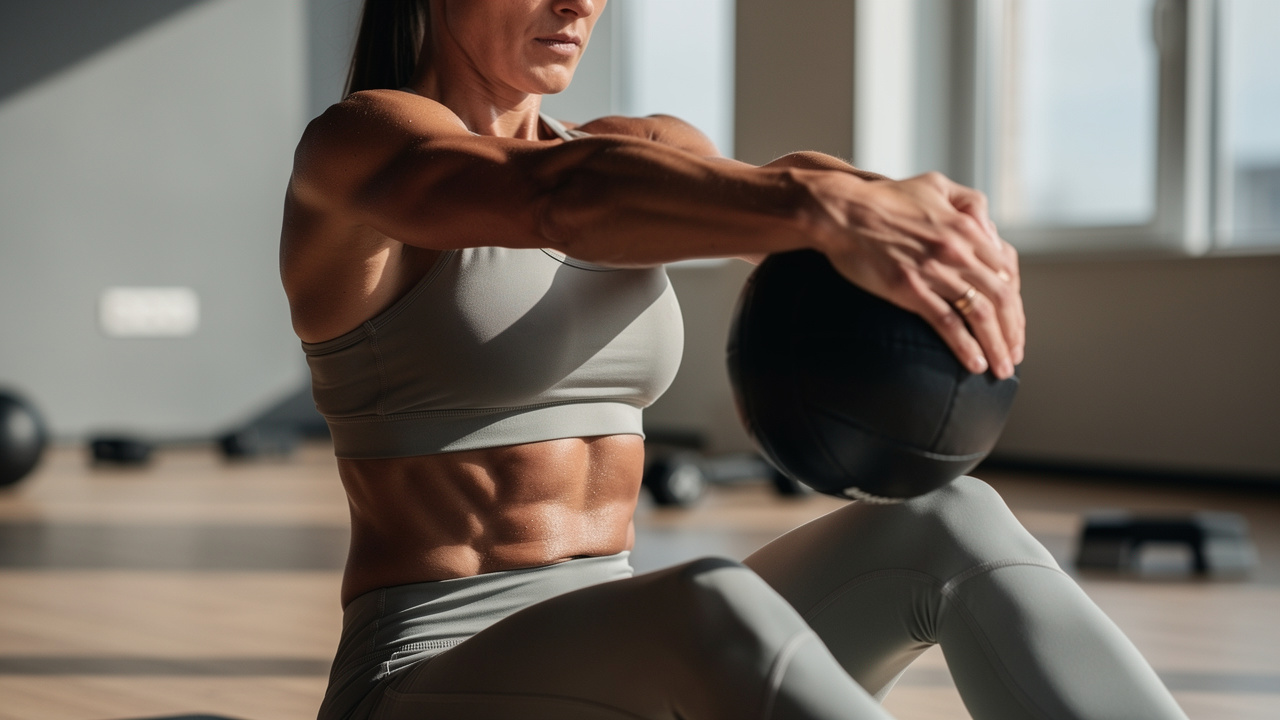
For golfers, the core is more than a six-pack. It includes the deep abdominals, obliques, lower back, pelvic floor, and hip flexors. This system links legs to arms so power can travel from the ground into the club.
We split core work into:
Anti-rotation / anti-extension drills that resist unwanted movement.
Rotational power drills that teach you to turn fast and stop under control.
Both qualities show up in every solid swing.
Anti-rotation work teaches the trunk to stay strong while the limbs move, just like a stable posture during the downswing.
Key exercises:
Pallof Press – Stand side-on to a band or cable, press it away from your chest, and resist the twist.
2–3 sets of 8–12 reps per side.
Bear Taps – Hands and feet on the floor, knees just off the ground; tap one shoulder at a time while keeping hips still.
2–3 sets of 12–20 taps.
Plank Variations – Front and side planks, plus short dynamic planks where arms or legs move while the trunk stays quiet.
20–30 seconds per set with perfect form.
Over time this shows up as a steady spine angle from address to follow-through.
Once you can resist rotation, you need to produce it quickly.
Useful drills:
Medicine Ball Rotational Throws – Stand in golf stance, load like a backswing, then drive the ball into a wall. Use a light ball for speed.
3–5 sets of 6 throws per side.
Cable Or Band Chops – Low-to-high and high-to-low chops train swing-like patterns. Let the hips and trunk drive while the arms follow.
Russian Twists / Banded Torso Rotations – Build rotational endurance and train both acceleration and braking.
Two to three core power sessions per week, alongside range work, are enough for most players.
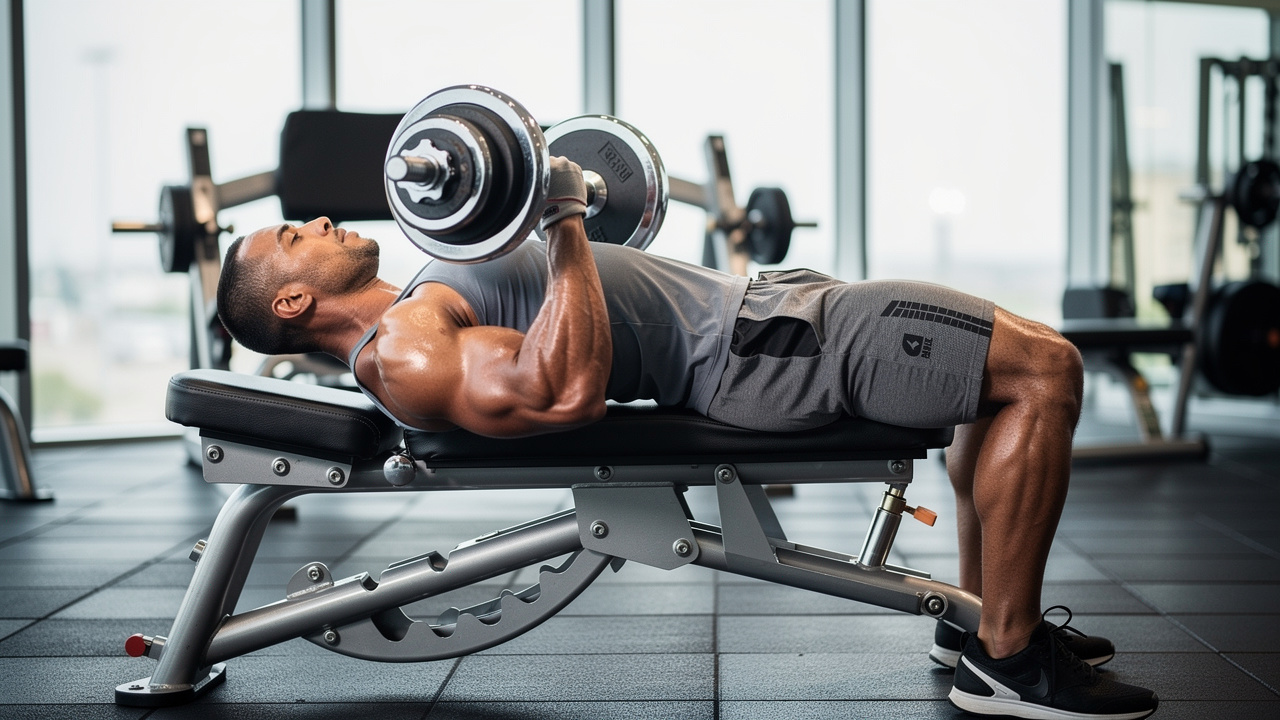
When programmed around movement (not body-building poses), upper body strength work improves club speed and shoulder health rather than making you stiff. Strong push and pull patterns give the club a more stable, powerful base.
At Elite Golf Academies we blend:
Pressing for speed through the ball.
Pulling for posture and shoulder health.
Specific shoulder-care drills to keep you swinging pain-free.
Push movements train the chest, shoulders, and triceps:
Push-Ups (from raised surface to floor variations)
2–4 sets of 8–12 reps.
Dumbbell Bench Press – Medium loads, full range, shoulder blades gently pulled back.
Overhead Pressing – Dumbbells or bar, ribs down, no leaning back; supports the top of the backswing and downswing power.
These moves help you apply more force to the club without sacrificing mobility.
Pulling work balances pressing and supports golf posture:
Rows (banded or cable) at low, mid, and high angles to hit the whole upper back.
Single-Arm Rows to correct left–right differences and add anti-rotation work.
Face Pulls / Lat Pulldowns to support shoulder health and backswing width.
Aim to match your weekly pulling volume to your pushing volume.
Healthy shoulders are non-negotiable for pain-free golf. We weave these into warm-ups and cool-downs:
Banded Z Press – Sitting on the floor, pressing overhead with a band to encourage upright posture.
External Rotation Drills with light bands to build the rotator cuff.
Scapular Mobility Drills such as arm circles and wall slides to keep shoulder blades moving well.
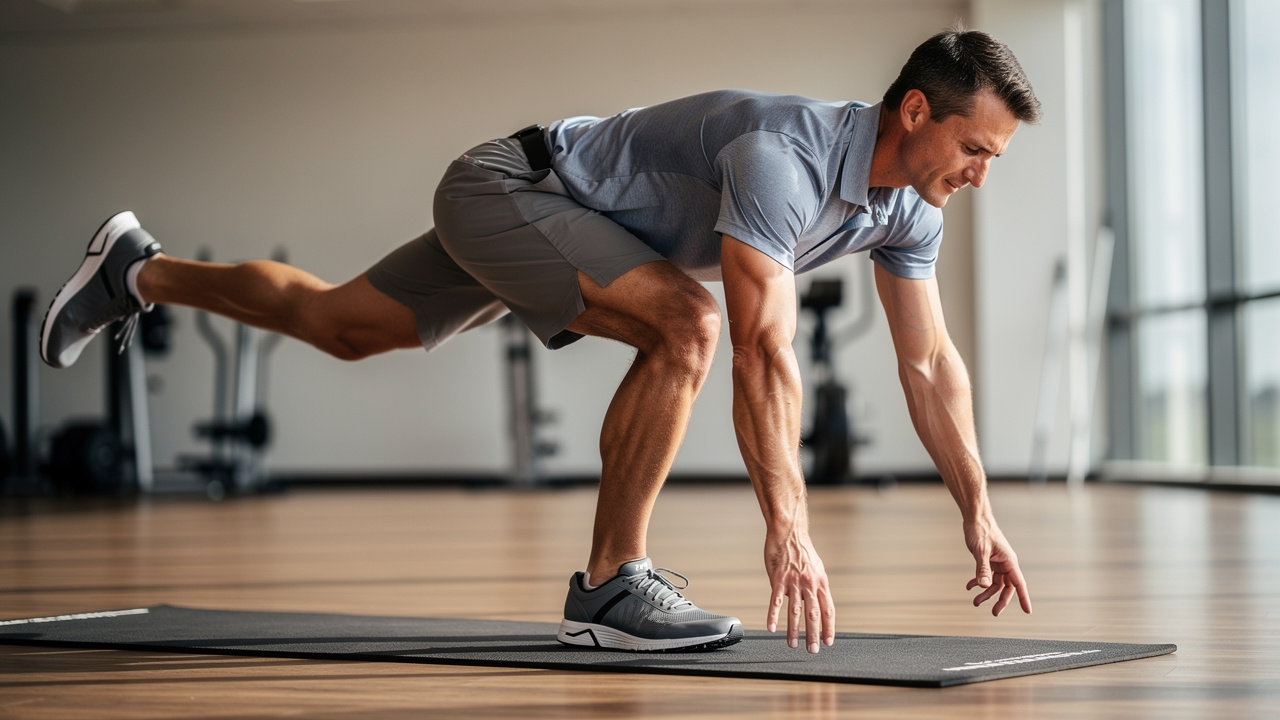
Distance starts from the ground. Strong legs and hips let you press into the turf, rotate hard, and keep posture for all 18 holes. Weak or tired legs mean swaying, sliding, and poor contact.
We use both:
Single-leg work to reflect weight shift in the swing.
Two-leg strength work to build the base that supports everything else.
Single-leg training teaches you to handle load and rotation when weight sits more on one side.
Key exercises:
Golfer’s Drop / Single-Leg Romanian Deadlift – Stand on one leg, hinge at the hip, reach the other leg back.
2–3 sets of 8–10 reps per leg.
Single-Leg Squats To A Box / Step-Ups – Build knee and hip control in golf-like positions.
Balance Drills – Standing on a pad or wobble board while making slow practice swings.
Better single-leg control often shows up as a smoother weight shift and more solid finish.
Two-leg patterns build total leg and hip strength:
Squats (goblet, back, or front) – Controlled sit down and stand up, chest tall, knees tracking over feet.
Deadlift Variations – Romanian or trap bar deadlifts to train a strong hip hinge and protect the back.
Lunges With Trunk Rotation – Combine lower body strength with core control.
Glute Bridges / Hip Thrusts – Wake up the glutes that drive hip rotation.
At Elite Golf Academies we assess squat and hinge patterns with video and, where useful, 3D tools to match the exercise to the player.
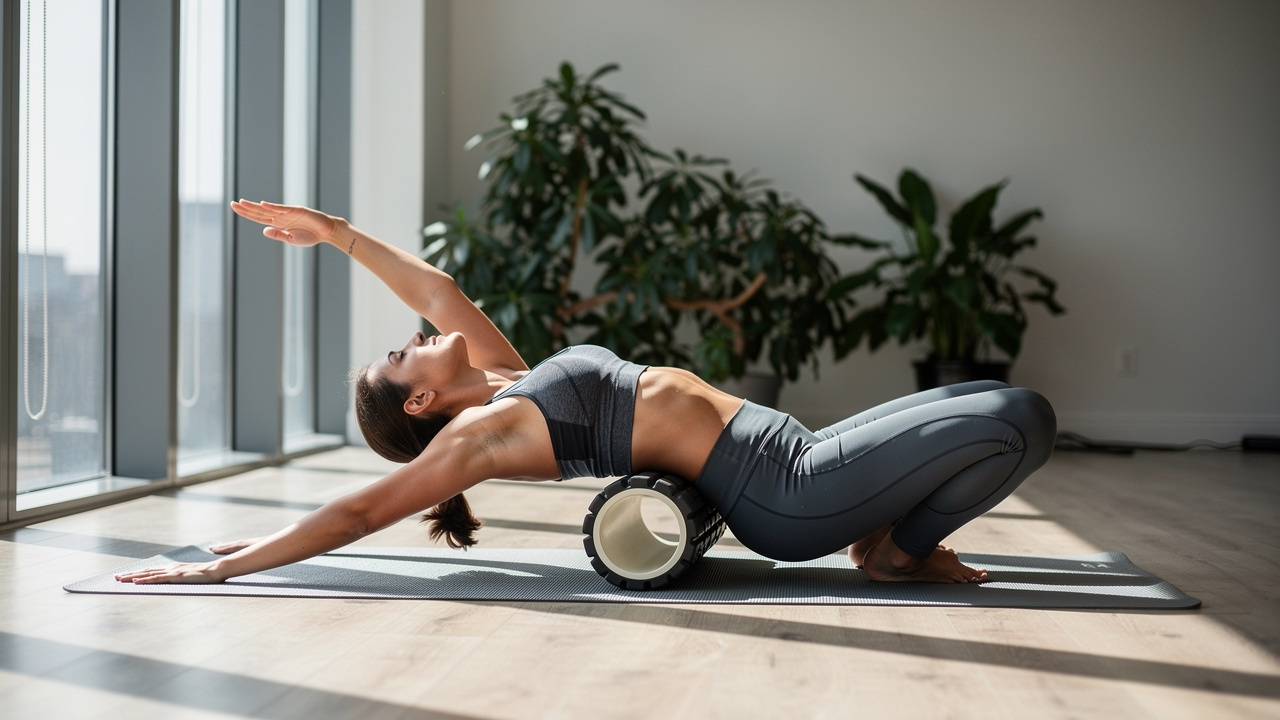
Strength without usable range of motion is a problem. Golfers need:
Flexibility – how far a joint can move when relaxed.
Mobility – how far it can move with control in golf-like positions.
Stiff hips, mid-back, or shoulders make the body cheat with sway, early extension, or excess lower back arch. Improve mobility and many swing faults soften before you even change technique.
The mid-back is central to a full shoulder turn.
Helpful drills:
Quadruped Thoracic Rotations (Thread The Needle) – Rotate from the mid-back rather than the lower back.
Cat–Cow Movements – Move gently between rounded and arched positions.
Seated Rotations & Foam Rolling – Encourage easier turn and extension.
We check thoracic mobility in our biomechanical screens and assign specific drills from there.
Mobile, strong hips allow rotation without sliding or dumping strain into the lower back.
Use:
90/90 Hip Positions and Pigeon Variations to improve rotation and glute length.
Hip Airplanes to train controlled rotation on one leg.
Clamshells & Lateral Band Walks to switch on the side glutes that stabilise the pelvis.
Shoulders and wrists handle big speed and load:
Doorway Pec Stretch and Sleeper Stretch for shoulder range.
Wrist Flexion / Extension Stretches to ease tendon stress.
Child’s Pose to relax back and shoulders.
We favour dynamic stretches before play and mostly static work after rounds or workouts.
Golf is fast, not just smooth. To gain speed safely you must:
Produce force quickly.
Stop that force without abusing joints.
Well-planned explosive golf workouts mix plyometrics with braking drills so power and control grow together.
Start with low volume and crisp reps:
Medicine Ball Slams – Drive a light ball into the ground using hips, trunk, and arms together.
Box Or Broad Jumps – Train lower body explosiveness with soft, controlled landings.
Rotational Med Ball Throws – Stand in golf posture and fire the ball sideways, mirroring the swing.
Keep sets short (8–12 total quality reps per exercise) with plenty of rest.
Braking drills protect elbows, shoulders, and spine:
Low-To-High Chop And Stop – Swing a ball or cable from low to high, then stop sharply at the top.
Eccentric Rows And Presses – Normal lift, but lower the weight over 3–5 seconds.
Band-Resisted Holds – Pause at the stretched position to train control.
We weave these into upper and lower body days at Elite Golf Academies, especially for players who practise a lot or swing very fast.
A list of exercises is helpful; a structured plan is what changes your game. We prefer shorter, regular golf workouts that sit alongside practice and play instead of competing with them.
Light cardio also supports on-course freshness and recovery, so we add it around strength and power work.
A typical balanced week might look like:
Day 1 – Lower Body + Core
Squats or deadlifts, single-leg work, Pallof presses, planks.
Day 2 – Active Recovery + Mobility
Brisk walk or easy bike, then thoracic, hip, and shoulder mobility.
Day 3 – Upper Body + Rotational Power
Dumbbell bench, rows, banded Z press, medicine ball throws or band chops.
Day 4 – Rest Or Light Cardio
Easy walk or nine holes with a light bag.
Day 5 – Full Body + Plyometrics
Lunges with rotation, hip thrusts, a small amount of jump work.
Day 6 – Core + Extra Mobility + Short Game Practice
Tie physical work directly to skills.
Day 7 – Full Rest
Let the body adapt.
During tournament weeks we reduce strength volume and keep mobility and activation work high.
To keep improving, training needs to get slightly harder over time:
Add 1–2 reps.
Increase load a little.
Slow the lowering phase.
Reduce rest periods.
We only change one variable at a time and track sessions in a simple log. Small exercise swaps every few weeks (new squat style, different row angle, fresh core drill) keep progress moving without confusion.
Many golfers arrive with lower back pain, sore shoulders, golfer’s elbow, or wrist issues. Rather than only chasing symptoms, we use targeted conditioning and smart recovery habits to remove the causes.
Typical patterns we see:
Weak glutes overworking the lower back.
Poor shoulder control stressing the front of the joint.
Grip and forearm weakness turning heavy practice into elbow pain.
Biomechanical assessments at Elite Golf Academies highlight these issues so we can address them directly.
Foam rolling helps ease tight areas and support recovery, especially in:
Lats – To free the sides of the trunk.
Glutes & Outer Thighs – To reduce stiffness from walking and swinging.
Thoracic Spine & Calves – To support turn and on-course endurance.
Spend 30–60 seconds per area, 2–4 times per week. Aim for “good pressure” rather than pain and avoid rolling directly on joints.
Gains appear between sessions, not during them.
Good habits:
Active Recovery – Easy walks, relaxed swimming, or light yoga on non-gym days.
Sleep – Most players do best with 7–9 hours per night.
Listening To Signals – Persistent soreness, heavy legs, or poor mood often mean it is time to ease off briefly.
We build lighter weeks into training plans around busy playing periods.
Training provides the signal. Food and drink provide the raw materials. Without solid nutrition, even the best golf workouts cannot do their job.
We keep nutrition advice clear and practical:
Enough protein for muscle repair.
Enough carbohydrate to fuel play and practice.
Enough healthy fat to support hormones and joints.
Good hydration, especially in warmer weather.
Simple guidelines:
Include protein at each meal (eggs, dairy, meat, fish, beans, or tofu).
Use carbohydrates such as oats, rice, potatoes, fruit, and wholegrain bread around harder sessions and rounds.
Add healthy fats from olive oil, nuts, seeds, and oily fish.
After strength or power sessions, a snack with protein and some carbs within a couple of hours supports recovery. Supplements are optional extras; most progress comes from everyday food choices.
Even mild dehydration can harm focus and coordination.
Start drinking before you reach the first tee.
Sip water regularly during the round rather than gulping at once.
Use light electrolyte drinks on long, hot days.
Choose smart on-course snacks: bananas, nuts, oat bars with modest sugar, or simple sandwiches.
For tournament play we help players plan these snacks by hole so energy stays steady.
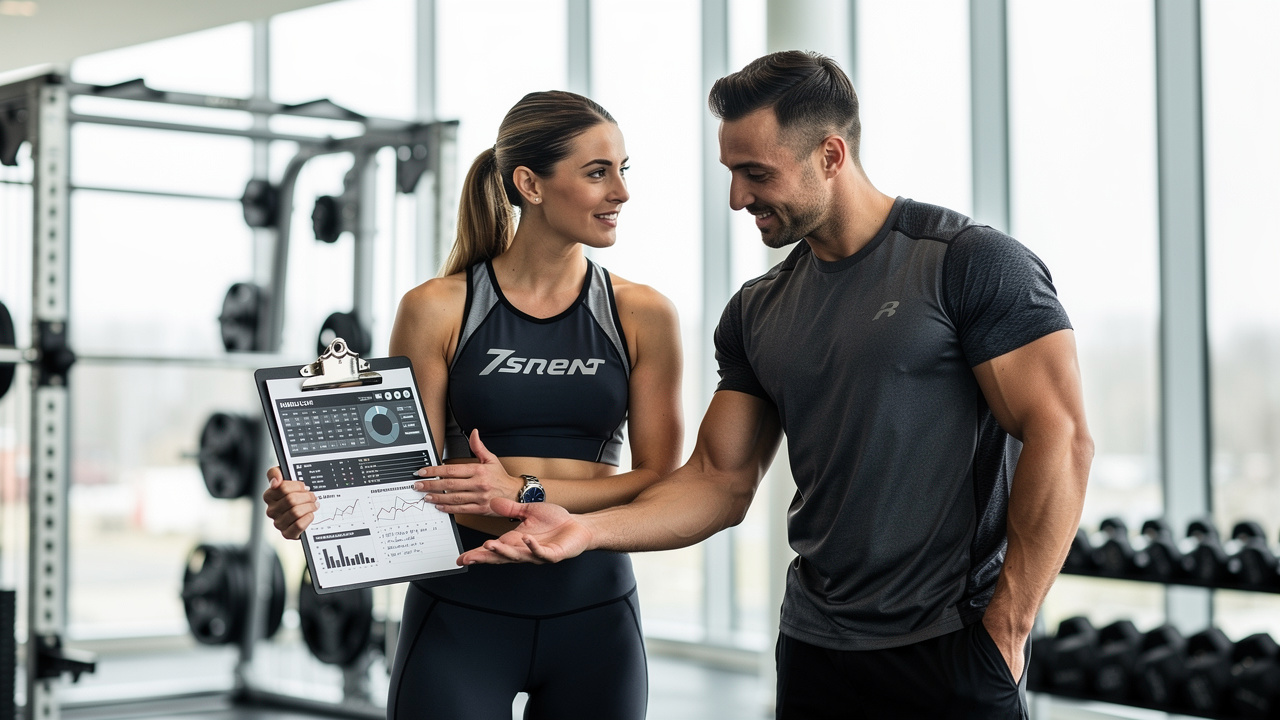
Generic online plans can help at the start, but they rarely reflect your age, swing style, work life, injury history, and goals. That is why Elite Golf Academies starts with assessment and then builds from there.
We combine:
Golf fitness expertise from coach Kiran Mistry.
PGA coaching.
Technology such as TrackMan 4, high-speed video, and 3D motion analysis.
Together, this shows not just how you swing, but why you move the way you do.
“Data tells us what the ball is doing; assessment tells us what the body is doing. We need both,” is a principle that guides our programmes.
During a biomechanical assessment we look at:
Simple patterns: squats, hinges, lunges, rotations, overhead reach.
Strength and endurance: core holds, push and pull measures, balance.
Mobility: hips, shoulders, thoracic spine.
We then link these findings to swing data from launch monitors and 3D motion. The result is a clear picture of your starting point and realistic goals.
Physical limits often sit behind stubborn swing faults. When the body cannot move into a position, no amount of technical talk will fix it.
Examples:
Better hip mobility and glute strength can reduce sway and help a deeper backswing.
Improved core stability can stop you standing up through impact.
Because our fitness work and PGA coaching run side by side, changes in the gym and on the range support each other.
Progress in golf is long-term. Bodies, swings, and schedules shift over time.
We offer:
Regular check-ins and programme updates.
Online fitness programmes for players who cannot reach a UK site often.
Season-based adjustments so heavy training blocks do not clash with key events.
This long view helps players keep improving year after year instead of bouncing between fads.
Starting golf fitness can feel daunting. The first month should focus on:
Learning safe movement patterns.
Building a realistic routine.
Noticing early changes, not chasing perfection.
Think of the first 30 days as a test phase where you learn how your body responds to golf workouts and how they fit around work and play.
In the first two weeks:
Do simple home checks: seated rotation, bodyweight squat depth, single-leg balance.
Learn base moves with light loads or bodyweight: squats to a chair, hip hinges with a dowel, easy planks, gentle thoracic and hip stretches.
Train 3–4 times per week for 30–40 minutes.
Keep a short training journal covering what you did, how it felt, and any soreness. This becomes valuable when you speak with a coach at Elite Golf Academies.
In weeks three and four you can:
Add a set to key exercises or choose slightly heavier dumbbells.
Extend plank holds by 10–15 seconds.
Introduce simple rotational drills such as light band chops or Russian twists.
Training can move to 4–5 shorter sessions per week with at least one full rest day. Many golfers notice less stiffness, better balance, and a stronger strike at this stage. It is also an ideal time to book a professional assessment to plan your next steps.
What gets measured tends to improve. Tracking progress in both fitness and golf keeps motivation high and shows whether your golf workouts are working.
We like to re-check simple benchmarks every 4–6 weeks and match them to on-course performance and launch monitor data.
Useful, simple tests include:
Upper Body: Maximum controlled push-ups, row strength with a set weight, band pull-apart reps.
Lower Body: Bodyweight squats to a set depth, single-leg balance time, controlled single-leg RDLs per side.
Core: Front and side plank times, anti-rotation holds.
Mobility: Hip and shoulder rotation measured with photos or video.
At Elite Golf Academies we use standardised assessment sheets so progress can be compared fairly over time.
The end goal is better golf. Track:
Clubhead Speed with driver and key irons.
Average Driving Distance and dispersion.
Fairways And Greens Hit, up-and-down percentages, and putts per round.
Back-Nine Energy And Comfort – fewer aches and more focus.
Handicap trends over 3, 6, and 12 months pull these pieces together. We often combine on-course stats with TrackMan and 3D data to give players a full picture of progress.
Golf-specific fitness is no longer just for tour players. It is a central part of reaching your own potential at any level. The five pillars we use at Elite Golf Academies – core stability, rotational strength, mobility, lower body stability, and endurance and recovery – all feed each other.
You do not need perfect weeks or fancy facilities, but you do need regular, focused golf workouts that reflect your body and goals. Working alone with generic plans can help at first, yet it is easy to miss hidden weak links or move towards injury.
Our experience across the UK shows that combining professional biomechanical assessment, PGA-level coaching, precise club fitting, and modern technology gives golfers a safer, faster route to better scores. A smart next step is to book a biomechanical assessment with Elite Golf Academies and set a clear starting point.
Picture stepping onto the first tee feeling strong, loose, and confident that your body will support any shot the round demands. That is the standard we work towards with every player.
Most golfers feel early changes within 4–6 weeks – better mobility, less day-after soreness, and improved posture at address. With steady golf workouts, clear swing speed gains often show up between 8–12 weeks. Larger handicap shifts tend to appear over 3–6 months, especially when fitness work runs alongside technical coaching.
It is not too late at all. In fact, structured golf workouts often help players over 50 the most. Sensible strength and mobility work can:
Reduce joint pain.
Improve balance and stability.
Add or maintain distance off the tee.
We start with lower loads, gradual progress, and extra focus on joint health. Many of our players over fifty report longer drives and less back pain after following a well-planned programme.
When designed for golfers, strength work tends to improve usable range of motion. We:
Train through full ranges.
Pair strength drills with mobility work.
Avoid body-building routines that focus only on heavy isolation moves.
Many tour professionals now follow year-round strength plans and still swing freely. At Elite Golf Academies we balance strength, mobility, and power so you feel looser and faster, not tighter.
You do not need hours every day. Many golfers see progress with:
2–3 sessions of 30–40 minutes per week, or
4–5 shorter sessions mixing strength, mobility, and power.
We rely on compound exercises and efficient session design so training fits around work, family, and tee times. Our online programmes at Elite Golf Academies are built with busy schedules in mind.
You can make strong progress at home. With:
A few resistance bands
A light pair of dumbbells
A small medicine ball
A foam roller
…you can train core stability, strength, mobility, and power. A gym adds heavier weights and more machines, which helps once you have a base in place. We design programmes that work fully at home, fully in a gym, or as a mix, and we also offer virtual coaching for extra guidance.
Mild muscle fatigue or slight soreness when starting golf workouts is normal. Sharp, stabbing, or joint pain is not. If you feel that kind of pain:
Stop the exercise and note where and when it hurts.
Try a lighter or simpler version with careful form.
If pain persists, seek professional assessment.
Our biomechanical screenings at Elite Golf Academies are built to find the root cause of these issues. Never train through clear pain; fix the source first so you can keep improving safely.